
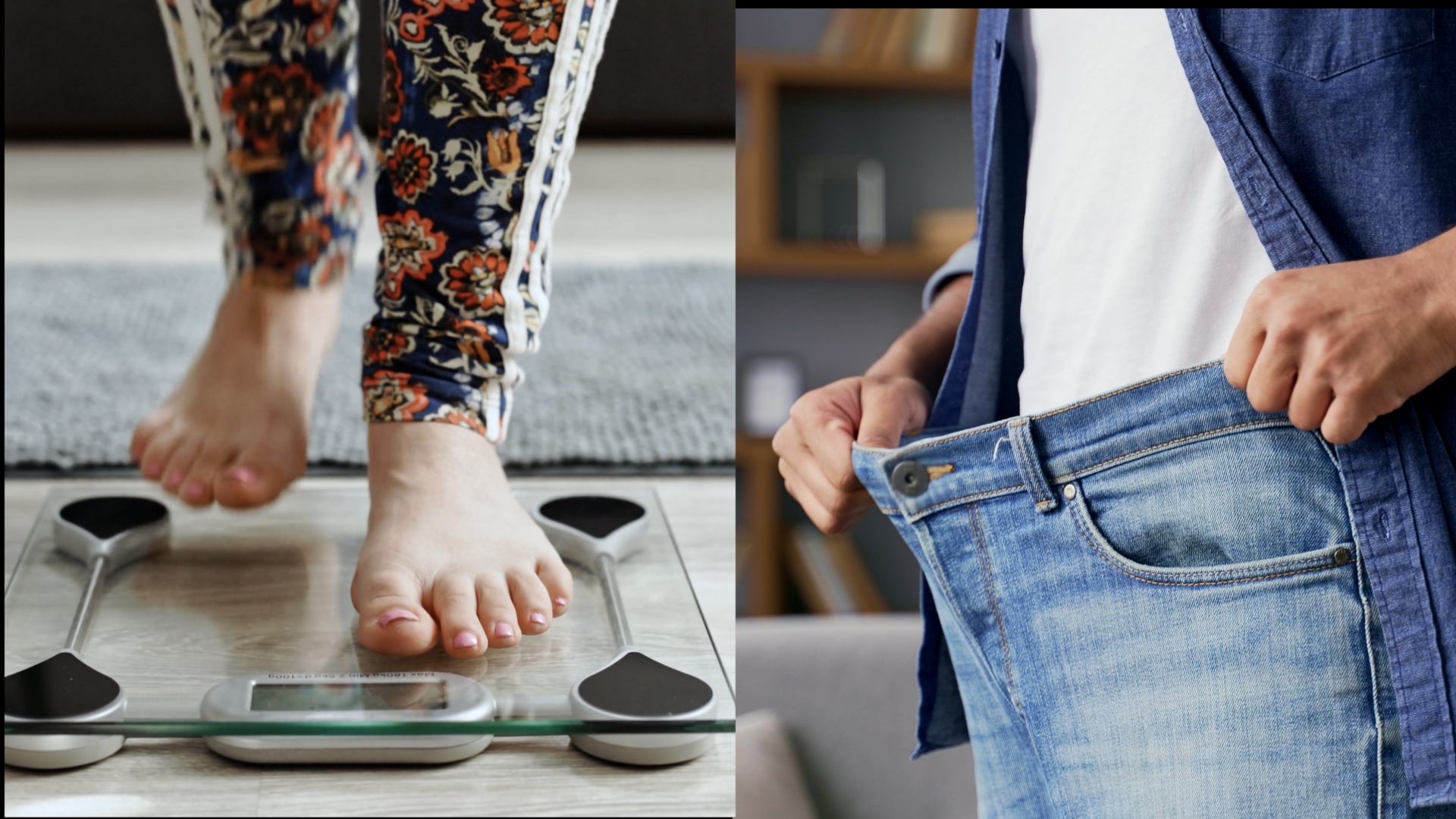
Weight doesn't equal fat loss
Just read the signs. If your composition is going in the right direction, you are losing fat. A lot of people get hung up on the scale, but weight doesn't equal fat loss. What you really want to do is lose fat. If your composition is changing, meaning your waist is coming in and your clothes are fitting better, then you are losing fat, and that is what is more important.
A lot of us, depending on where we are in our journey, are carrying a lot of visceral fat. That is the hidden fat, the dangerous fat, the metabolically active poison in your body fat. That is the stuff we want to get rid of, and sometimes it takes a while.
You're burning fat, your body is holding it
My take is that you are burning fat and tapping into your stores, but it is the under-slept body that is holding it back. What will probably end up happening is you have a whoosh effect, where the weight finally drops.
It is not necessarily about the weight. In my own journey, because I leaned heavily on protein, I was gaining back muscle while I was losing fat, so the scale would go up. It was very deceptive. Once I relied on my composition and how I felt, I realized the scale is good for one thing, tracking how your body takes in your food and how it processes it. When you eat any carbohydrates, you are going to put on water weight. So it is more about trending to understand how your weight goes up and down.
When you are in a calorie deficit, you will start to see about a 0.2 pound drop on average. It is consistency. You have to know where you started from, and that is just trending the numbers. Don't stress about it. If you go up 5 pounds, you might come down 3 pounds two days from now.
The five pillars work together
On the nutrition and movement pillars, you are doing well. But the whole body orchestrates together on five pillars: movement, sleep, stress, supplementation, and nutrition. We don't work in isolation. Each of the pillars is orchestrated together to heal.
This is not just my intuition. In a clinical trial published in the Annals of Internal Medicine, two groups ate the same diet and lost the same total weight, but the group that slept a full night lost far more of it as fat, while the sleep-deprived group lost most of theirs as muscle. Sleep did not decide whether they lost the weight. It decided what they lost.
When I had severe metabolic dysfunction, I had to start with one pillar at a time in order to figure myself out and listen to my body. It seems like you already know where your other problems are. Your sleep and stress are the weaknesses here, so pull those in and start moving them in the right direction, and all the pieces will come together.
You are probably storing, but you are going in the right direction. What you need to work on is getting more sleep. Sleep is the rest and repair cycle, where your body starts to heal.
Start with your wake-up time
Regaining your sleep hygiene is about looking at what is stopping you from getting to sleep at a reasonable hour. But more important than that is what time you wake up in the morning. That is what matters most for a healthy circadian rhythm, and it starts with getting up early. What time your body goes to bed will adjust on its own. Rather than trying to move both goalposts, keep one steady and let the other follow. The earlier you can get up, the better off you are.
Why can't you do that? Most of it is external. It is external influences, external pressures, external expectations. You need to get right with that and build more capacity for yourself, because that is your priority. There is no bigger priority than yourself.
As you start waking up early, you can get up before the kids, or take the dog for a walk, before anyone else in the house is up. Spend those few minutes in the morning letting your body wake up and get energized for the day.
You are doing a lot of the right things. Keep the nutrition and the movement, bring in the sleep, and keep moving forward. Trend the numbers instead of stressing over them, and let the pieces come together.
~ Foster
By Foster
Questions people ask about this
My stress comes from my home and I can't just fix it. What is the first thing I can actually change?
Start with the one thing that is in your control, which is what time you get up in the morning. Do not try to move both ends of your sleep at once. Pick a wake-up time, hold it steady, early if you can, and your bedtime will follow on its own.
Most of what stops you is external, other people's pressures and expectations, and you have to get right with that, because there is no bigger priority than you. Get up before the house, take the dog out, and give your body a few quiet minutes to wake up.
I'm in a real calorie deficit but the scale barely moves. Is stress and bad sleep actually blocking my fat loss?
If your composition is going in the right direction, meaning your waist is coming in and your clothes are fitting better, then you are losing fat. Weight does not equal fat loss.
What is most likely happening is that you are burning fat and tapping into your stores, but an under-slept, stressed body holds onto water, and that water hides the loss on the scale. It usually lets go all at once after a good night of sleep, and you see a sudden drop.
So the deficit is not the problem. The lever is sleep, the rest and repair cycle where your body heals. Pull that pillar in and keep going.
Should I cut my calories even more since the scale is not moving?
No. When your hormones are already under strain from stress and poor sleep, cutting harder just pushes them further out of line and digs the hole deeper.
You are doing well on nutrition and movement. The weak spot is sleep and stress. So instead of adding more restriction, bring in the pillar you have been neglecting. Stop adding load, and go put your attention on your sleep.