
How much protein do you actually need in a short eating window?
The number the app gave you is probably wrong, and the muscle-loss fear is mostly in your head.
You're doing 16:8, or you've gone all the way to one meal a day, and your tracking app is telling you to eat something like 130 grams of protein inside that window. You look at your plate and figure there's no physical way to get there without turning every meal into a rotisserie chicken and a protein shake. And underneath it all sits the fear that if you don't hit the number, you're going to lose the muscle you have.
Let me take both of those apart, because I've lived in that exact window for a long time.
The number is almost certainly inflated
Here's the first thing to fix. Most apps calculate your protein target off your current weight, and if you're carrying a lot of extra weight, that hands you a number built for a bodybuilder, not for you. Anchor it to your ideal body weight instead, the weight you're working toward, not the one on the scale today. The moment you do that, the target usually drops to something you can actually eat, and the panic goes with it. Everyone can look up their grams per day, so go find your ballpark, then anchor it to ideal, not current.
And don't grade any single day as the whole story. I track by protein because it's the easy one to track, especially early on before you know your portion sizes, when we all tend to either overeat or undereat. And undereating is just as bad here as overeating. But you take a weekly average. Some days run lighter, some run heavier, and that's normal. You don't judge this day by day. Protein-forward always, and if you're genuinely hungry, that's your signal to reach for protein first.
The funny part is where this ends up. I don't even track it anymore. I got consistent enough, through all the fasting and the repetition, that it became something I just know. My plate takes care of it. That's the real destination. The tracking is scaffolding you use until the awareness is built in, and then you put it down.
The plate habit that does half the work
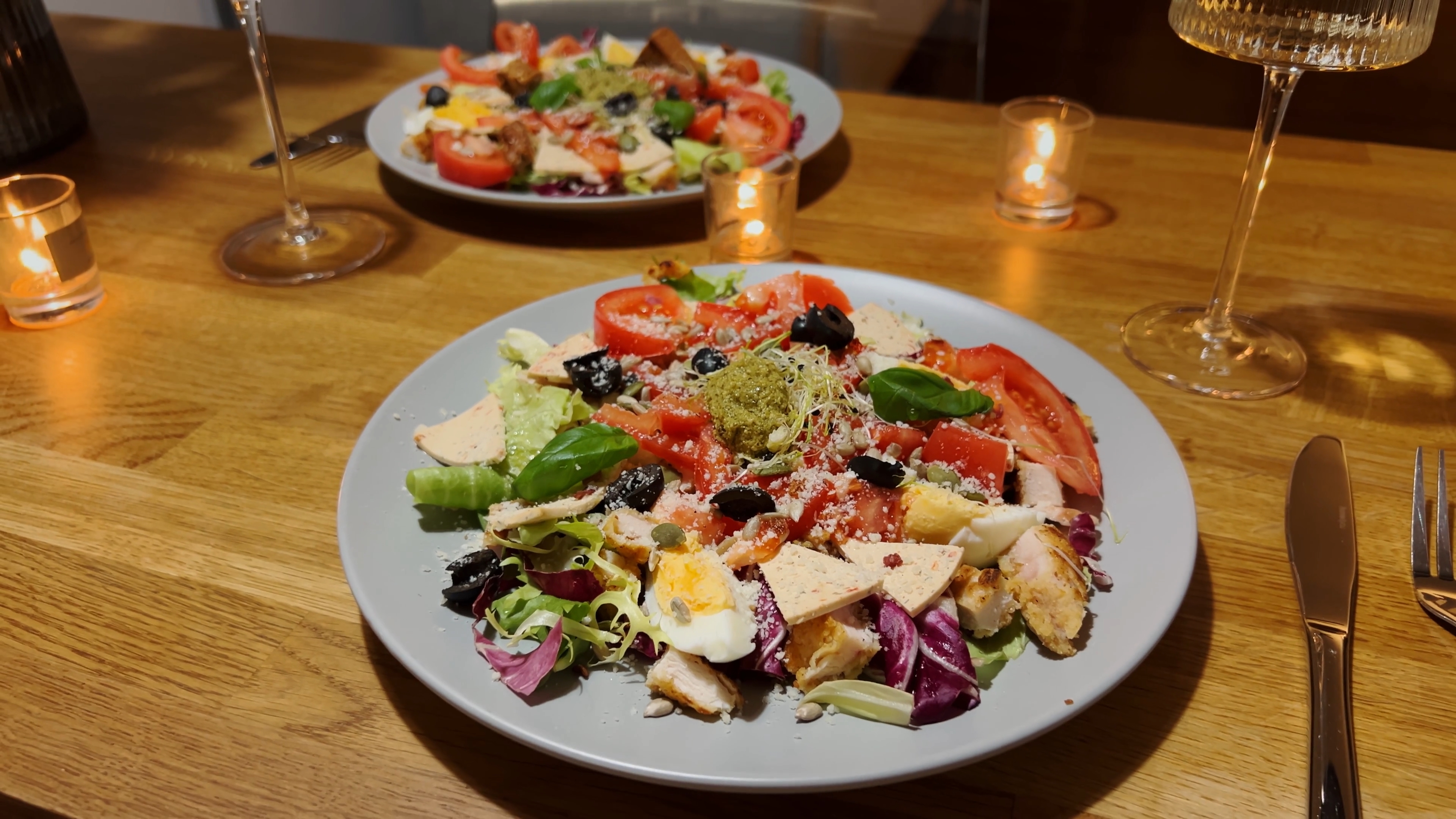
The other muscle I built is how I look at a plate, especially eating out, where it's the wild west on ingredients. Fibrous vegetables and protein go first. Carbs go last. That ordering alone keeps the insulin spikes lower without you having to think hard about it.
I call the trap naked carbs. You sit down at a restaurant, they bring the bread and butter before anything else, and you hit it on an empty stomach. That's a naked carb. I always put some protein or fat in first. It's a small thing, but once the habit is built you just order differently. Most of the time I already know what I'm having, and it's as close to whole foods as I can get, so there's no guessing game.
Now the muscle fear
Honestly, a lot of the time "I'll lose my muscle" is an excuse not to do the thing, and it's coming from someone who is a hundred or two hundred pounds overweight. Pick your battles. Be protein-forward, know roughly how much you're getting, and if you want to add strength training or even just some bodyweight work, do it. That covers it.
I did not worry about losing muscle, and here's the piece people miss. I didn't drop weight fast the way some people do. It took me a long time, and my journey is different from yours, so you can't measure yourself against "lose this many pounds a week or you failed." I lost slowly in part because I was building muscle I never had in the first place, and I had plenty of fat on my body to use as fuel. I didn't need to keep feeding it.
Which is exactly why the scale lies to you here. If you're losing fat and building muscle at the same time, the number barely moves, and you'd swear nothing was happening. So stop reading a single number on a scale. I like the clothing test. The belt, how things fit, the way your stomach flattens out. Sometimes you won't see it yourself, and it's other people who point out that you look different.
What to actually do
Anchor your protein to your ideal body weight, not today's weight, and take a weekly average instead of grading every day. Keep it protein-forward, and let vegetables and protein lead the plate with the carbs at the back. Add a little resistance work if you want the muscle insurance, and it doesn't take much. Then get off the scale as your only measure and start watching the belt. The number was scaring you into a corner it never needed to.
~ Foster
By Foster
Questions people ask about this
Will fasting or a short eating window make me lose my muscle?
A lot of the time that fear is an excuse not to start, and it usually comes from someone carrying a lot of extra fat. Pick your battles.
I did not worry about it. I lost weight slowly, partly because I was building muscle I never had in the first place, and I had plenty of fat on my body to use as fuel. Stay protein-forward, know roughly how much you are getting, and if you want the insurance, add some strength training or even just bodyweight work. It does not take much. And remember the scale lies here, because if you are losing fat and building muscle at once, the number barely moves. Watch how your clothes fit instead.
My app says I need around 130 grams of protein a day and I can't eat that in a short window. Is that number even right?
Probably not, and this is the first thing to fix. Most apps calculate your protein target off your current weight, so if you are carrying a lot of extra weight, they hand you a bodybuilder's number.
Anchor it to your ideal body weight instead, the weight you are working toward, not the one on the scale today. The target usually drops to something you can actually eat, and the panic goes with it. Track by protein because it is the easy one to track, but take a weekly average. Some days run lighter, some heavier, and that is fine. You do not grade this day by day, and if you are genuinely hungry, that is your cue to reach for protein first.
How do I keep my blood sugar steadier when I do eat, especially at a restaurant?
Change the order you eat things in. Fibrous vegetables and protein first, carbs last. That alone keeps the insulin spikes lower without much thought.
I call the trap naked carbs. You sit down, they bring bread and butter before anything else, and you hit it on an empty stomach. I always put some protein or fat in first. It is a small habit, but once it is built you just order differently, and you keep it as close to whole foods as you can so there is no guessing game with the ingredients.